
Overview of the Topical Drug Approval Process: From Laboratory to Market
The topical drug approval process is a complex journey that transforms an innovative formulation into an approved product available at the pharmacy shelf. For pharmaceutical and biotech organizations, understanding each phase—from initial concept through regulatory review—is essential for strategic planning and resource allocation. For topical and ophthalmic drug products, this process involves a comprehensive blend of scientific rigor, regulatory compliance, and quality management.
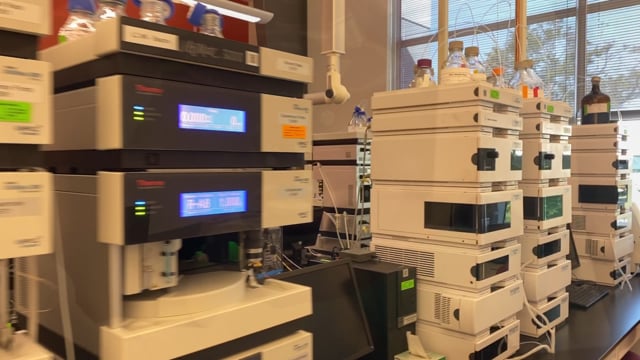
The journey begins in the laboratory, where formulation scientists develop prototypes that balance efficacy, safety, and patient acceptability. Early-stage development typically focuses on excipient compatibility, API solubility, and preliminary stability. As the project advances, the emphasis shifts to analytical method development, scale-up, and the generation of critical data sets required for regulatory filing. These include analytical validation, stability studies, and clinical material manufacturing under cGMP conditions.
Unlike oral solid dosage forms, topical products often present unique challenges related to skin permeation, local versus systemic exposure, and excipient interactions with the skin or ocular surface. Navigating the topical drug approval process requires a deep understanding of these factors, as well as the specific regulatory requirements associated with product type, indication, and route of administration. Coordination among formulation scientists, analytical chemists, regulatory teams, and manufacturing partners is crucial for timely, compliant submissions.
For further reading, see Topical Drug Products (7/94) from the FDA.
Companies often engage specialized partners like Dow Development Labs in Petaluma, CA, to help bridge the gap between laboratory innovation and regulatory approval. Such collaborations can provide access to expertise in formulation development, analytical testing, cGMP manufacturing, and regulatory documentation—factors that can help mitigate risk and support efficient program advancement.
Regulatory Classification and Pathways for Topical Drug Products
The regulatory classification of a topical drug product significantly shapes the approval pathway and data requirements. In the United States, the Food and Drug Administration (FDA) distinguishes between prescription (Rx) and over-the-counter (OTC) topical drugs, as well as differentiating between new chemical entities, generics, and drugs submitted via the 505(b)(2) pathway.
For instance, a new corticosteroid cream formulated for a novel indication would likely require a full New Drug Application (NDA), involving comprehensive nonclinical, clinical, and chemistry, manufacturing, and controls (CMC) data. In contrast, a generic equivalent to an approved topical product may be eligible for the Abbreviated New Drug Application (ANDA) process, where the focus shifts to demonstrating bioequivalence, often through in vitro release testing (IVRT) and in vitro permeation testing (IVPT) instead of clinical endpoint studies.
The 505(b)(2) pathway offers another route for products that rely in part on published literature or existing studies not conducted by the applicant. This pathway is frequently leveraged for topical drugs reformulated with new excipients, concentrations, or delivery systems. For example, a well-known antifungal agent developed in a novel topical gel format may pursue approval via 505(b)(2), referencing safety and efficacy data from previously approved formulations.
It is important for development teams to clearly establish the regulatory classification early, as this will dictate the types of studies, data, and documentation required. Engaging regulatory consultants and development partners experienced in topical drug approval process navigation can help minimize delays and ensure alignment with FDA expectations.
Essential Testing Requirements for Topical Drug Product Development
Testing is at the core of topical and ophthalmic drug product development. Regulatory authorities expect robust data packages that demonstrate product safety, quality, and performance. The following are key testing requirements for most topical drug candidates:
- Analytical Method Development and Validation: Specific, accurate, and reproducible methods for API quantification, identification, and impurity profiling are essential. Validation typically covers specificity, linearity, accuracy, precision, and robustness.
- In Vitro Release Testing (IVRT): Used to evaluate drug release from semisolid dosage forms and support batch-to-batch consistency. IVRT data is often required for both NDA and ANDA submissions.
- In Vitro Permeation Testing (IVPT): Assesses drug permeation through excised human or animal skin, providing insight into local and systemic exposure. IVPT may be used to support bioequivalence claims for generics.
- Microbial Testing: Includes total aerobic microbial count, absence of specified pathogens, and preservative efficacy testing for multi-dose formulations.
- Stability Studies: Conducted under ICH-recommended conditions (e.g., 25°C/60% RH, 40°C/75% RH) to support shelf-life claims and assess potential degradation products.
- Container Closure Integrity: Ensures packaging maintains product sterility and prevents contamination, critical for ophthalmic and certain topical products.
- Compatibility Testing: Evaluates interactions between formulation and packaging materials under storage conditions.
Dow Development Labs is experienced in designing and executing these testing programs, drawing on established protocols and industry best practices to generate high-quality data packages suitable for regulatory submission.
Stability Studies and Packaging Compatibility: Meeting Regulatory Expectations
Stability studies are a cornerstone of the topical drug approval process, as they provide the evidence regulators require to establish product shelf life, label storage instructions, and expiration dating. Topical formulations—especially creams, gels, and ointments—can be sensitive to changes in temperature, humidity, and light, making robust stability testing critical for successful regulatory review.
Typical stability protocols for topical drugs follow ICH Q1A(R2) guidelines, including long-term (e.g., 25°C/60% RH), accelerated (e.g., 40°C/75% RH), and, where necessary, refrigerated conditions. For ophthalmic or preservative-free products, additional sensitivity to environmental factors may require more extensive monitoring. Regulatory authorities expect data on assay, degradation products, physical attributes (color, viscosity, phase separation), pH, and microbial limits throughout the proposed shelf life.
Packaging compatibility is equally important. The formulation must be shown to remain stable and non-reactive in its primary container closure system. For example, a topical ointment packaged in an aluminum tube must not leach trace metals or degrade in contact with the tube’s lining. Compatibility studies also consider potential extraction or sorption of formulation components by the packaging, which may affect efficacy or safety.
Recent regulatory trends emphasize the need for extractables and leachables (E&L) studies, especially for novel packaging or delivery systems. Sponsors should carefully select packaging early in development and coordinate with analytical teams to design appropriate compatibility protocols. Experienced partners like Dow Development Labs can assist with the design and execution of these studies, supporting robust, submission-ready data generation.
GMP Manufacturing and Quality Controls for Topical Products
cGMP manufacturing is a regulatory requirement for all clinical and commercial batches of topical drug products. Quality controls are designed to assure that each batch meets predetermined specifications for identity, strength, purity, and quality. This is especially crucial for semisolid and ophthalmic formulations, where small variations in process or raw material quality can translate to significant differences in product performance or safety.
Key elements of cGMP manufacturing and quality control for topical drugs include:
- Raw Material Qualification: All excipients and APIs must be qualified for identity, purity, and quality against established specifications.
- In-Process Controls: Monitoring critical process parameters such as mixing time, temperature, and homogenization to maintain consistency.
- Batch Release Testing: Includes assay, impurities, viscosity, appearance, pH, and microbial limits for each manufactured lot.
- Environmental Monitoring: Particularly important for sterile or preservative-free ophthalmic preparations.
- Documentation and Traceability: Comprehensive batch records and deviation investigations are required to demonstrate compliance with regulatory expectations.
Manufacturing scale-up from laboratory to pilot and commercial scale demands careful process development and validation. Dow Development Labs provides cGMP manufacturing services for clinical trial materials and supports technology transfer for commercial launch, ensuring that quality systems and documentation are maintained throughout the product lifecycle.
Preparing CMC Documentation for Regulatory Submissions
Regulatory submissions for topical drug products require a detailed Chemistry, Manufacturing, and Controls (CMC) section that describes the product’s composition, manufacturing process, analytical methods, and quality controls. A well-prepared CMC package is essential for regulatory review and can help streamline the topical drug approval process.
Typical CMC documentation includes:
- Drug Substance Information: Source, characterization, specifications, and control methods for the active pharmaceutical ingredient (API).
- Drug Product Composition: Detailed qualitative and quantitative listing of all formulation components, including excipients and their grades.
- Manufacturing Process Description: Step-by-step narrative of the production process, highlighting critical parameters and controls.
- Control of Excipients: Specifications and testing protocols for all excipients and raw materials.
- Analytical Methods and Validation: Descriptions and validation data for all methods used to test the drug product and substance.
- Stability Data: Summary tables and supporting reports demonstrating product stability under proposed storage conditions.
- Container Closure System: Information on the packaging, compatibility data, and evidence of container closure integrity.
Preparation of CMC documentation often involves cross-functional collaboration among formulation scientists, analytical chemists, manufacturing experts, and regulatory affairs professionals. Engaging an experienced development partner such as Dow Development Labs can help ensure that submissions are complete, accurate, and aligned with current regulatory expectations.
Navigating the Topical Drug Approval Process: Regulatory Interactions and Review
Engaging proactively with regulatory authorities is a critical element of the topical drug approval process. Regulatory milestones—such as pre-IND (Investigational New Drug) meetings, end-of-Phase 2 meetings, and pre-NDA meetings—offer sponsors the opportunity to align on data expectations, clarify requirements, and address potential issues before formal submission.
During the review process, agencies like the FDA may issue information requests, clarifications, or complete response letters regarding CMC data, clinical results, or labeling. For topical drugs, questions often focus on bioequivalence (for generics), stability, container closure compatibility, and the adequacy of analytical methods. Sponsors should be prepared to respond promptly and comprehensively, often coordinating input from multiple internal and external stakeholders.
Utilizing experienced partners for regulatory strategy, submission planning, and response preparation can help facilitate smoother interactions and reduce the risk of costly delays. Dow Development Labs collaborates with clients to support data generation, technical writing, and regulatory question responses, helping teams navigate the multifaceted review process for topical and ophthalmic drugs.
Post-Approval Commitments and Lifecycle Management for Topical Drugs
Approval marks a significant milestone in the topical drug approval process, but ongoing regulatory obligations and lifecycle management activities are essential for maintaining market authorization and product quality. Post-approval commitments may include continued stability monitoring, adverse event reporting, and implementation of any agreed-upon risk mitigation strategies.
Typical post-approval activities for topical drugs include:
- Ongoing Stability Studies: Continuation of stability testing on commercial lots to confirm product shelf life and detect any trends or emerging issues.
- Process Validation and Verification: Periodic review and revalidation of manufacturing processes, particularly after scale-up or site changes.
- Change Control: Implementation and documentation of changes to formulation, process, or packaging, with appropriate regulatory notifications or supplements as required.
- Pharmacovigilance: Monitoring and reporting of adverse events or product complaints in accordance with regulatory requirements.
- Annual Reporting: Submission of updates to regulatory agencies, including summaries of stability data, manufacturing changes, and quality issues.
Lifecycle management also encompasses planning for new indications, line extensions, or formulation improvements. Maintaining strong documentation and quality systems ensures compliance and supports the long-term success of topical drug products. Collaborative partners like Dow Development Labs can assist with ongoing stability, CMC updates, and technical support throughout the product lifecycle.
If your organization is preparing to advance a topical or ophthalmic drug candidate, Dow Development Labs can support your development and regulatory strategy from early formulation through post-approval lifecycle management. To discuss your project with our experienced team, call 707-202-6965.
Frequently Asked Questions
What are the main steps in the topical drug approval process?
The topical drug approval process includes formulation development, preclinical testing, clinical trials, and submitting data to regulatory agencies for review. Each step requires specific studies, such as stability, safety, and efficacy, to ensure the product meets all regulatory requirements.
How long does it take to get a topical drug approved?
The timeline for topical drug approval can range from several years to over a decade, depending on the complexity of the formulation and clinical studies required. Early planning and understanding of regulatory expectations can help streamline the process.
What kind of testing is required for topical drug products?
Required testing for topical drugs includes analytical method validation, stability studies, skin permeation tests, and clinical trials to assess safety and effectiveness. These tests ensure the product performs as intended and meets regulatory standards.
What are common challenges in getting topical drugs approved?
Common challenges include demonstrating adequate skin penetration, managing local versus systemic exposure, and ensuring excipient compatibility with the skin. Working with an experienced partner like Dow Development Labs in Petaluma, CA, can help address these hurdles.
Who can help guide me through the topical drug approval process?
Specialized contract development organizations like Dow Development Labs offer expertise in formulation, testing, and regulatory submission for topical drug products. You can contact them at 707-202-6965 for support throughout the approval journey.